
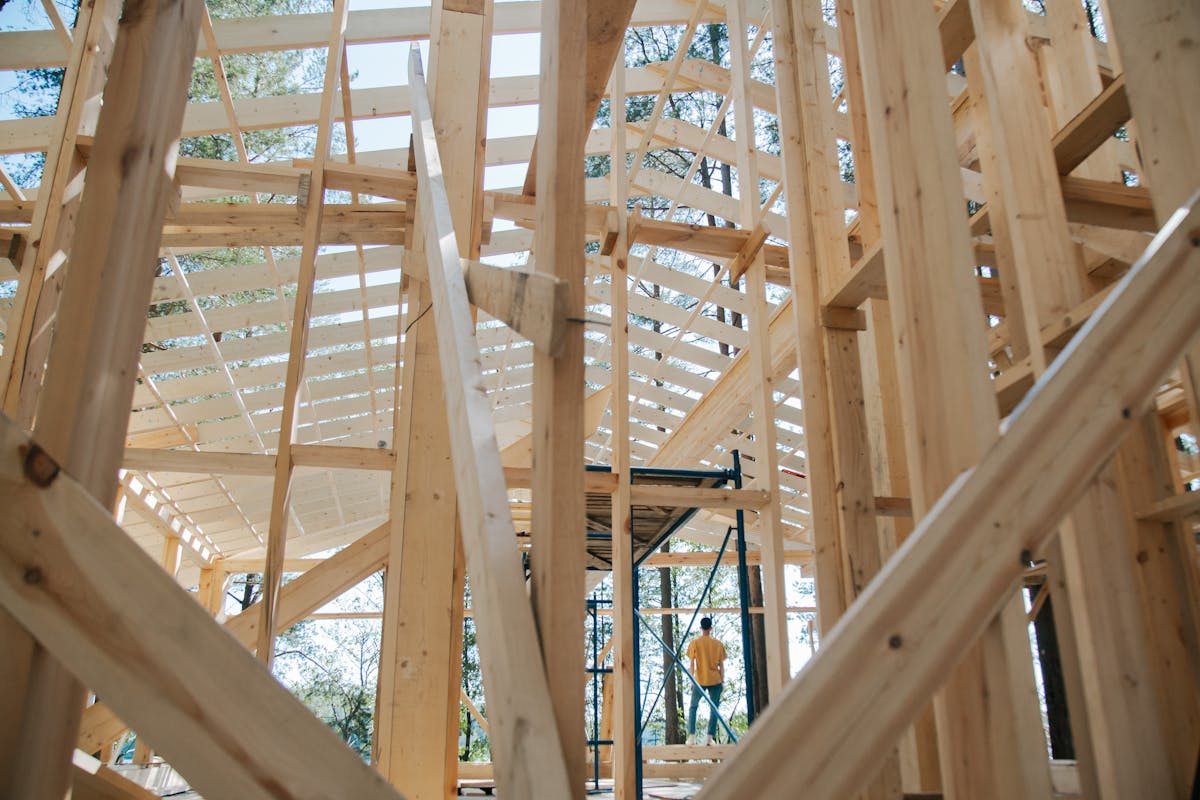
New Construction Inspections: Why Your New Knoxville Home Still Needs One
New Construction Inspections: Why Your New Knoxville Home Still Needs One
Knoxville and the surrounding East Tennessee communities are growing. New subdivisions are going up in Hardin Valley, Farragut, and South Knoxville. Lenoir City and Loudon County are seeing significant residential development. New homes are being built throughout Anderson and Blount counties. If you are buying one of these brand-new properties, you might be wondering whether you really need a home inspection.
The answer is yes, without question. And this is coming from someone who spent 30 years in the construction industry before becoming a home inspector. I have been on both sides of the process, and I can tell you firsthand that new construction has its own set of issues that are every bit as important to identify as those in older homes.
The “It’s Brand New” Misconception
The most common objection I hear is: “Why would I inspect a brand-new home? It just passed all the code inspections.” It is a reasonable question, and it deserves a thorough answer.
Municipal code inspections and a professional home inspection serve fundamentally different purposes. Code inspections verify that construction meets the minimum requirements of the building code at specific stages — foundation, framing, rough-in, and final. They are performed by building inspectors who may spend 15 to 30 minutes at the property and who are often managing dozens of inspections per day across multiple job sites.
A professional home inspection, by contrast, is a comprehensive evaluation of the finished product. I spend three to four hours at a new construction property, examining every system and component in detail. I am not checking whether the house meets minimum code requirements — I am evaluating whether everything was installed correctly, functions properly, and is free of defects.
These are very different standards. A home can pass every code inspection and still have significant issues. I see it regularly.
What I Find in New Construction
In my experience inspecting new homes across the Knoxville area, here are the issues that come up most frequently:
Grading and Drainage Problems
New construction sites undergo significant earth-moving, and the final grading is one of the last things completed. It is also one of the things most frequently done inadequately. I routinely find:
- Soil that slopes toward the foundation rather than away from it
- Settled soil around the foundation perimeter where backfill was not properly compacted
- Downspouts that terminate too close to the foundation or discharge onto areas that drain toward the house
- Swales and drainage pathways that do not function as designed
In East Tennessee’s clay soils, getting grading right is critical. Water that pools against a new foundation today becomes a moisture intrusion problem in a few years. Identifying and correcting grading issues before you close — while the builder is still responsible — is far easier than dealing with the consequences later.
HVAC Installation Deficiencies
Heating and cooling systems in new construction are often installed by subcontractors working under tight schedules. Common issues I find include:
- Disconnected or poorly sealed ductwork. Using thermal imaging, I frequently identify ducts that have separated at joints or were never properly sealed, allowing conditioned air to escape into the attic or crawl space. This directly impacts your comfort and energy bills from day one.
- Refrigerant line issues. Improper connections, missing insulation on suction lines, or kinked lines that restrict flow.
- Condensate drainage problems. Improperly routed condensate lines, missing traps, or primary drain lines that were not tested before the walls were closed.
- Thermostat placement. Thermostats installed in locations that give inaccurate readings — near supply registers, on exterior walls, or in direct sunlight.
I have seen brand-new homes where the HVAC system was losing 20 to 30 percent of its capacity through duct leaks that would have gone unnoticed without thermal imaging. That is not a minor issue — it is money and comfort you would lose every single day.
Plumbing Defects
Even in new construction, plumbing issues are surprisingly common:
- Slow drains from construction debris left in drain lines
- Leaking connections under sinks or at water heater fittings, sometimes too subtle to notice until water damage becomes visible
- Improperly installed water heaters — missing expansion tanks, incorrect temperature and pressure relief valve discharge, or inadequate clearance
- Fixtures not properly secured
- Missing or non-functional shutoff valves
These issues are not the result of aging — they are installation errors that can be corrected easily if caught before your final walkthrough with the builder.
Electrical Issues
New homes should have modern, code-compliant electrical systems, and most do. But I still find issues regularly:
- Missing GFCI or AFCI protection where required by current code
- Improperly wired outlets with reversed polarity or open grounds
- Missing cover plates on junction boxes, particularly in attics and crawl spaces
- Overloaded circuits in kitchens or workshops
- Exterior outlets or fixtures that are not properly weatherproofed
Each of these is a correction the builder should make at no cost to you. But they will only be corrected if someone identifies them, and that is not always happening at the code inspection level.
Roof and Exterior Deficiencies
Roofing crews work fast, and sometimes quality suffers:
- Improper flashing at roof-to-wall transitions, chimneys, and valleys
- Exposed nails that should be sealed
- Insufficient attic ventilation — too few vents or vents blocked by insulation
- Siding installation errors — gaps, improper nailing patterns, missing kick-out flashing
- Missing caulking at windows, doors, and penetrations
A roofing defect on a new home is particularly insidious because it may not produce a visible leak for months or even years. By the time water staining appears on your ceiling, the damage behind the walls may already be extensive.
Insulation and Air Sealing Gaps
Thermal imaging is invaluable for new construction inspections. The infrared camera reveals exactly where insulation was missed or improperly installed — information that is literally invisible to the naked eye once drywall is up.
Common findings include:
- Voids in wall insulation where batts were compressed, folded, or missed entirely
- Uninsulated areas around recessed lights, electrical boxes, and plumbing penetrations
- Missing insulation in bonus rooms over garages, which are notoriously difficult to insulate properly
- Gaps at the rim joist/band joist where the floor system meets the exterior wall
- Attic insulation disturbed by other trades working after the insulation contractor finished
These gaps affect comfort, energy efficiency, and even moisture management. In East Tennessee’s humid climate, insulation voids can become condensation points where moisture accumulates inside wall cavities.
Cosmetic and Finish Issues
While not structural, finish defects are worth documenting because the builder is responsible for correcting them:
- Drywall cracks, nail pops, and unfinished joints
- Paint defects and touch-up needs
- Cabinet alignment and hardware issues
- Flooring gaps, scratches, or installation defects
- Door and window operation problems
A comprehensive punch list gives you documented leverage to ensure the builder addresses these items before or shortly after closing.
Builder Inspections vs. Independent Inspections
Most builders conduct their own quality checks and offer a final walkthrough with the buyer. Some builders are meticulous about this process, and some are not. But even the best builder walkthrough is not a substitute for an independent inspection. Here is why:
Different Expertise
The builder’s superintendent is focused on construction completion. A home inspector is focused on the finished product’s condition and performance. These are different perspectives that catch different things.
Different Tools
I use thermal imaging on every inspection. This technology identifies hidden issues — duct leaks, insulation voids, moisture — that a visual walkthrough cannot detect. Most builders do not perform thermal scans of their completed homes.
Different Incentives
The builder has a financial interest in closing the sale. Your independent inspector’s only obligation is to you. There is no pressure to minimize findings or overlook issues.
Different Standards
Code compliance is the minimum standard. My inspection evaluates quality of workmanship, proper installation, and functional performance beyond what the code requires.
I want to be clear: most builders in the Knoxville area do good work and stand behind their homes. I am not suggesting that builders are trying to hide problems. But construction is a complex process involving dozens of subcontractors and thousands of individual tasks. Mistakes happen. An independent inspection catches the ones that slipped through.
When to Schedule Your New Construction Inspection
The ideal approach includes multiple inspections at different construction stages:
Pre-Drywall Inspection
This is performed after framing, rough electrical, rough plumbing, and HVAC installation are complete but before drywall is hung. It is your only opportunity to see the structural framework, verify insulation installation, check framing connections, and identify issues that will be permanently hidden behind walls. If you can only do one phase inspection, this is the one I recommend.
Final Inspection
Performed when construction is substantially complete, typically a few days before your builder walkthrough. This is the comprehensive evaluation of all finished systems and components.
11-Month Warranty Inspection
Most builders offer a one-year warranty. Having an inspection performed at the 11-month mark catches issues that have developed during your first year of occupancy — minor foundation settling, nail pops from lumber drying, and any systems that have not performed well through a full cycle of seasons. This gives you documented findings to submit before your warranty expires.
The Cost of Skipping the Inspection
A new construction inspection in the Knoxville area typically costs $400 to $600, depending on the home’s size and the inspection scope. Consider what that investment protects:
- A home that costs $300,000 to $500,000 or more
- Systems and components that the builder is obligated to correct if defects are identified before closing
- Your comfort and energy costs for years to come
- The structural integrity and longevity of your most significant asset
When I identify a significant HVAC duct leak, a grading deficiency, or a flashing error in a new home, the builder corrects it at no cost to the buyer. If those same issues are discovered two years later, they become the homeowner’s problem and expense. The inspection fee pays for itself many times over.
Protect Your Investment
A new home is a major investment, and you deserve to know exactly what you are getting. The fact that a home is brand new does not mean it is defect-free — it means the builder is still responsible for making it right. An independent inspection gives you the documentation you need to hold the builder accountable and ensures you start homeownership with confidence.
Schedule Your New Construction Inspection
With 30 years in the construction industry and InterNACHI certification, I bring a unique perspective to new construction inspections. I know how homes are built because I have built them. That experience means I know where to look, what to look for, and how to evaluate whether the work meets professional standards.
Use our online quote calculator to get an estimate for your new construction inspection, or call me at (865) 816-4084. I serve Knoxville, Farragut, Lenoir City, Maryville, Oak Ridge, and all of East Tennessee. Let’s make sure your new home is everything it should be.
Ready to Schedule Your Inspection?
Get an instant quote and book online, or call Steven directly.