
Crawl Space Issues in Tennessee Homes: What Every Buyer Should Know
Crawl Space Issues in Tennessee Homes: What Every Buyer Should Know
If you are buying a home in East Tennessee, there is a very good chance it has a crawl space. Crawl space foundations are the dominant foundation type throughout Knox, Loudon, Blount, Anderson, and Roane counties, and for good reason — they work well with our region’s hilly terrain and soil conditions. But crawl spaces also present a unique set of challenges that every buyer should understand before closing on a property.
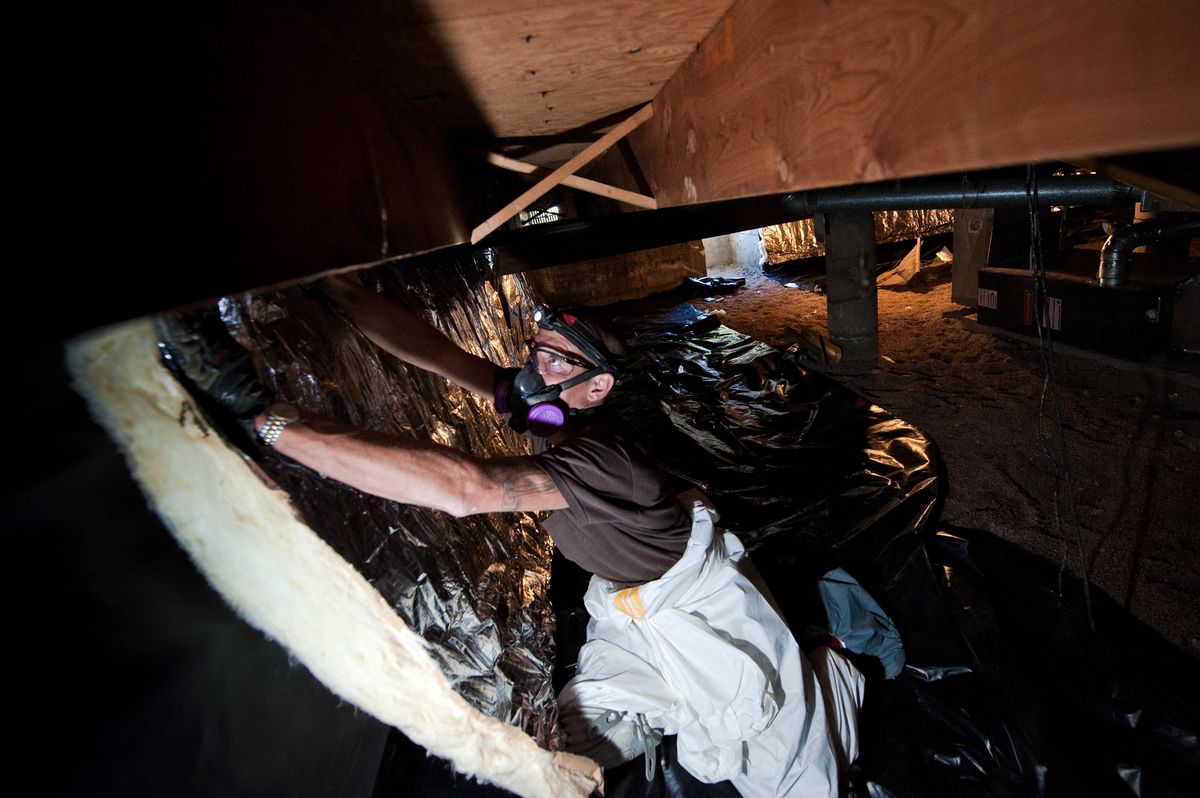
As a home inspector with 30 year construction background serving the Knoxville area, I have been in thousands of crawl spaces across East Tennessee. I have seen the full range — from well-maintained spaces that are dry and structurally sound to neglected nightmares with standing water, rotting joists, and active mold growth. What I have learned is that the condition of the crawl space is one of the single best indicators of a home’s overall health.
Why Crawl Spaces Are So Common in East Tennessee
Before diving into the problems, it helps to understand why crawl spaces are so prevalent here. East Tennessee’s topography is characterized by rolling hills, ridges, and valleys. Building a slab-on-grade foundation requires relatively flat terrain and stable soil conditions. Our landscape rarely provides that. Crawl space foundations can adapt to sloping lots, provide clearance for plumbing and mechanical systems, and accommodate the variable soil conditions that come with building in the foothills of the Smoky Mountains.
The challenge is that our climate creates difficult conditions for these below-grade spaces. East Tennessee experiences average annual humidity levels of 70 to 80 percent, rainfall of approximately 47 inches per year, and temperature swings that create condensation. That combination of moisture and warmth is the root of nearly every crawl space problem I encounter.
The Seven Most Common Crawl Space Issues
1. Missing or Damaged Vapor Barriers
A vapor barrier is a sheet of polyethylene plastic (typically 6-mil or thicker) laid over the exposed soil in a crawl space. Its job is simple but critical: prevent ground moisture from evaporating upward into the crawl space. Bare soil in a crawl space can release a surprising amount of moisture — studies have shown that a 1,000-square-foot crawl space with exposed earth can introduce 15 to 20 gallons of water vapor per day.
In my inspections across Knox County and surrounding areas, I frequently find vapor barriers that are:
- Completely absent, especially in older homes built before vapor barriers became standard practice
- Torn or displaced, often from previous plumbing or electrical work where contractors entered the crawl space and did not replace the barrier afterward
- Only partially covering the soil, leaving large exposed areas
- Too thin, using material that has degraded over time
A proper vapor barrier should cover 100 percent of the exposed soil, overlap at seams by at least six inches, and extend up the foundation walls. When I find a missing or compromised vapor barrier, it goes into the report as a significant finding because it is the foundation of crawl space moisture control.
2. Standing Water
Finding standing water in a crawl space is one of the most concerning discoveries during an inspection. It can result from several sources:
- Poor exterior grading that directs surface water toward the foundation
- Missing or clogged gutters allowing roof runoff to cascade against the foundation walls
- High water table conditions, particularly common in lower-lying areas near rivers and creeks in East Tennessee
- Plumbing leaks from supply or drain lines running through the crawl space
- Inadequate or failed drainage systems
Standing water creates an environment where structural damage accelerates rapidly. Wood that remains wet will eventually rot. Metal hardware corrodes. And the humidity from standing water permeates the entire crawl space, affecting insulation, creating conditions for mold growth, and degrading air quality in the living space above.
During heavy rain events — which are not uncommon in East Tennessee — even a crawl space that appears dry on a sunny day might experience significant water intrusion. That is why I look not just for current standing water but for evidence of past water: sediment lines on foundation walls, water staining on piers and supports, and mineral deposits that indicate repeated flooding.
3. Structural Damage to Floor Joists and Subfloor
When moisture persists in a crawl space over months or years, the wooden structural components begin to suffer. Floor joists, rim joists, sill plates, girders, and subfloor sheathing are all vulnerable.
Signs of moisture-related structural damage include:
- Soft, spongy wood that yields to pressure from a screwdriver or probe
- Visible fungal growth on wood surfaces (white, brown, or dark discoloration)
- Sagging or deflecting floor joists that no longer provide adequate support
- Deteriorated sill plates where the wood framing meets the foundation — this is often the first area to fail because it is closest to the ground moisture source
- Delaminating subfloor (the plywood or OSB sheets that form the base of your flooring) that has swollen and lost its structural integrity
In homes I have inspected throughout Knoxville and surrounding areas, structural damage from crawl space moisture is one of the most expensive issues to remediate. Sistering or replacing floor joists, installing new sill plates, and replacing subfloor can cost thousands to tens of thousands of dollars depending on the extent of the damage.
With 30 year construction background, I can assess not just whether damage is present but how far it has progressed and what the repair approach would involve. That level of detail helps buyers understand the true cost of what they are looking at.
4. Mold and Fungal Growth
The warm, humid conditions inside a poorly managed crawl space are ideal for mold growth. Mold can colonize wood framing, insulation, vapor barrier material, and even the soil surface itself. Common types found in East Tennessee crawl spaces include Aspergillus, Penicillium, and Cladosporium, though specific identification requires laboratory testing.
Why does mold in the crawl space matter for the living space above? The stack effect. Warm air inside your home naturally rises, creating a slight negative pressure at the lower levels. This draws air upward from the crawl space through gaps in the floor system, around plumbing penetrations, and through other pathways. Research suggests that 40 to 50 percent of the air you breathe on your first floor originally enters from the crawl space. If that space has active mold, those spores are being drawn into your living environment.
For occupants with allergies, asthma, or compromised immune systems, this is a genuine health concern. Even for healthy individuals, the musty odor associated with mold growth affects indoor air quality and comfort.
It is important to note that home inspectors in Tennessee are not mold assessors, and I do not perform mold testing as part of a standard home inspection. However, when I observe visible mold-like substances in a crawl space, I document it and recommend evaluation by a qualified mold professional.
5. Insulation Problems
Crawl space insulation takes many forms, and most of them eventually cause problems in East Tennessee’s climate:
Fiberglass Batt Insulation
Fiberglass batt insulation between floor joists is the traditional approach, and it is also the most failure-prone. When fiberglass absorbs moisture — and in an East Tennessee crawl space, it will — it sags, falls from its position between the joists, and loses virtually all of its insulating value. I estimate that more than half of the crawl spaces I inspect have insulation that has partially or completely fallen from the floor system. What remains is often damp, contaminated, and doing more harm than good.
Rigid Foam Insulation
Rigid foam insulation on foundation walls is the approach used in encapsulated crawl spaces. When properly installed as part of a complete encapsulation system, this method is far more durable and effective. However, I occasionally find installations where the foam board was applied without properly addressing moisture sources first, creating a situation where moisture is trapped behind the insulation.
The practical impact of crawl space insulation failure is straightforward: cold floors in winter, higher energy bills year-round, and reduced comfort throughout the home.
6. Pest Entry Points and Activity
Crawl spaces provide shelter, moisture, and access to wood — everything pests need. The most common pest issues I encounter in East Tennessee crawl spaces include:
Termites
Termites are the most significant concern. Subterranean termites are active throughout East Tennessee and cause more property damage in our region than storms and fires combined. During inspections, I look for mud tubes on foundation walls, damaged wood, and discarded wings. While termite inspection is formally performed by licensed pest control professionals, I always note signs of termite activity when I observe them.
Carpenter Ants
Carpenter ants are attracted to moist, decaying wood. A crawl space with moisture problems is an open invitation.
Rodents
Rodents (mice and rats) enter through surprisingly small openings in foundation vents, around pipe penetrations, and through gaps where the framing meets the foundation. Signs include droppings, chewed insulation, and nesting materials.
Snakes
Snakes follow the rodent population. While not a structural concern, it is worth mentioning because encountering snakes in a crawl space is not uncommon in rural parts of Loudon, Roane, and Blount counties.
I inspect all foundation vents, access doors, and penetrations for gaps that allow pest entry. Sealing these openings is a simple, inexpensive step that pays significant dividends.
7. Inadequate Ventilation or Improper Encapsulation
Crawl space ventilation is an area where building science has evolved significantly, and there is some confusion among homeowners about the right approach:
Vented Crawl Spaces
Vented crawl spaces have foundation vents that allow outside air to circulate through the space. This was the standard approach for decades and is still acceptable under most building codes. The theory is that air circulation removes moisture. In practice, during East Tennessee summers, those vents introduce warm, humid air into a cooler crawl space, causing condensation on cooler surfaces — the exact opposite of the intended effect.
Encapsulated (Sealed) Crawl Spaces
Encapsulated (sealed) crawl spaces eliminate foundation vents entirely. The crawl space is sealed with a heavy-duty vapor barrier on the floor and walls, all vents are closed, and the space is conditioned with dehumidification or conditioned air from the home’s HVAC system. When properly executed, encapsulation is the superior approach for East Tennessee’s climate.
The problem I encounter is partial or improper encapsulation — the vents are sealed but no dehumidification is provided, the vapor barrier does not fully cover all surfaces, or bulk water issues were not addressed before encapsulation. A sealed crawl space without dehumidification can actually trap more moisture than a vented one.
What Buyers Should Do
If you are purchasing a home in East Tennessee, here is my advice regarding crawl spaces:
Insist on a Thorough Crawl Space Inspection
Insist on a thorough crawl space inspection. Not all inspectors enter crawl spaces. Some take a quick look from the access point and move on. I personally enter every accessible crawl space and walk its full extent, because many problems are not visible from the opening. Make sure your inspector does the same.
Ask About Moisture
Ask about moisture. Specifically ask your inspector about the vapor barrier condition, evidence of past or present water intrusion, and the state of the wood structural components.
Budget Accordingly
Budget accordingly. If the inspection reveals crawl space issues, get repair estimates before finalizing negotiations. Crawl space encapsulation in the Knoxville area typically costs $5,000 to $15,000 depending on the size of the space and the scope of work. Structural repairs add to that cost.
Think Long-Term
Think long-term. Crawl space problems do not improve on their own. Moisture damage is progressive. A minor issue today becomes a major expense in five years if left unaddressed.
The Bottom Line
The crawl space is not the most glamorous part of a home, but in East Tennessee, it might be the most important space to understand. The condition of the crawl space affects structural integrity, indoor air quality, energy efficiency, and long-term maintenance costs. A dry, well-maintained crawl space is the foundation (literally) of a healthy home. A neglected one is a ticking clock.
Get Your Crawl Space Evaluated
Whether you are buying a home or want to know the current condition of your crawl space, a professional inspection gives you the answers you need. With 30 year construction background and InterNACHI certification, I provide thorough crawl space evaluations as part of every home inspection I perform across Knox, Loudon, Blount, Anderson, Roane, Monroe, McMinn, and Hamblen counties.
Use our online quote calculator for an instant estimate, or call me directly at (865) 816-4084. Your crawl space has a story to tell — let’s find out what it is.
Ready to Schedule Your Inspection?
Get an instant quote and book online, or call Steven directly.